What I built
I built the path from estimand and experiment design to known-truth estimator checks, policy simulation, and inspectable release artifacts.
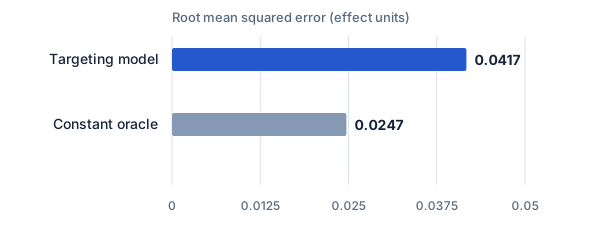
Bottom line: the known-truth benchmark measured the HTE learner at 0.0417 RMSE versus a 0.0247 constant oracle, and the predeclared gate correctly stopped the weaker model from being promoted.
Research question and relevance
Question: How do causal mechanisms and heterogeneous treatment effects shape market outcomes and policy interventions in field-like datasets?
Credible policy evaluation requires more than a point estimate. The project connects identification assumptions, estimator recovery, heterogeneous effects, intervention allocation, and reporting so a decision can be traced back to evidence.
Original paper or report: CasualLab is a project-originated research toolkit; this release does not claim to reproduce a specific third-party paper without a documented citation and benchmark.
Data and sample
The public GitHub copy contains synthetic fixtures, NYC-oriented samples, schemas, and tests. The full versioned research content is stored under CasualLab/ in the Dataset.
| Record | Current evidence |
|---|---|
| Original sample period | Not applicable to synthetic fixtures; source-specific periods are documented per run. |
| Updated sample period | Published with the current checksummed public-data and known-truth validation artifacts. |
| Data availability | Compact fixtures on GitHub; full research payload on Hugging Face. |
Capabilities demonstrated
- Define the estimand and identification assumptions.
- Load an authorized source or documented fixture.
- Estimate average and heterogeneous effects.
- Run estimator-recovery and sensitivity checks.
- Publish outputs with provenance and a result manifest.
Robustness work includes alternative specifications, heterogeneous-effect recovery, placebo or synthetic checks where applicable, and explicit release boundaries.
Validation evidence
| Validated component | Evidence | Interpretation |
|---|---|---|
| HTE recovery audit | 0.0417 learner RMSE vs 0.0247 oracle | The predeclared gate correctly withheld an unsupported heterogeneous-effect claim. |
| Controlled spillover recovery | 2.006 / 1.495 / 0.691 recovered | Own, neighbor, and history effects closely match known truths of 2.000 / 1.500 / 0.700 in the controlled slice. |
| Public-data system | 19.7M records → 194,928 cells | Checksummed ingestion, conservation checks, and deterministic artifacts verify the engineering path. |
These are known-truth and public-data validation results, not a live NYC treatment-effect estimate.
Reproduction and citation
Run make reproduce from the CasualLab/ folder of the open-economic-quant repository. Cite the portfolio release, Dataset revision, CasualLab, and every original data provider used in a run.
Evidence boundary
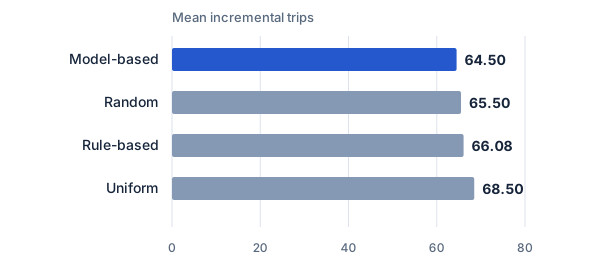
The published HTE comparison is semi-synthetic and evaluated against known truth; the public trip panel is descriptive. Neither is presented as a live marketplace treatment effect.